Blogs

Maximizing Your Potential: Study Tips for CPDC Certification

Pega CPDC exam preparation tips.

Embarking on the journey to attain the Certified Pega Decisioning Consultant (CPDC) certification signifies a commitment to professional growth and expertise in Pega decisioning. It's crucial to cultivate a robust study plan that maximizes comprehension and retention of key concepts to navigate this endeavor successfully; here are some meticulously curated tips for amplifying your preparation and optimizing your performance in the CPDC certification exam.

What Is the CPDC Certification All About?

CPDC, the Certified Pega Decisioning Consultant certification, is aimed at individuals crafting and building a Pega Customer Decision Hub solution. This certification confirms that you possess the expertise to utilize the design principles of Next-Best-Action Designer, 1:1 Operations Manager, Decision Strategies, and Predictive Analytics effectively.

Study Tips to Pass the CPDC Certification Exam:

Grasp the CPDC Framework and Objectives:

Before delving into study materials, it's imperative to grasp the framework and objectives of the CPDC exam. Familiarize yourself with the exam's format, including the types of questions and the weighting of different topics. This understanding will serve as a roadmap for structuring your study plan effectively.

ServiceNow CIS-ITSM Certification: Expert Insights and Exam Readiness Strategies

CIS-ITSM study tips.

Preparing for the CIS-ITSM certification exam requires dedication, focus, and effective study strategies. This certification is highly regarded in Information Technology Service Management and can open doors to numerous career opportunities. To help you succeed in your exam preparation, we have compiled a comprehensive list of study tips explicitly tailored for the CIS-ITSM exam.

What Is the CIS-ITSM Certification All About?

The ServiceNow Certified Implementation Specialist - IT Service Management exam confirms that a candidate who passes the CIS-ITSM exam possesses the necessary skills and fundamental knowledge to assist in setting up, implementing, and upholding ServiceNow ITSM applications.

Target Audience for the CIS-ITSM Certification Exam:

The ServiceNow Certified Implementation Specialist - IT Service Management, CIS-ITSM exam is open to ServiceNow customers, partners, employees, and individuals who aim to become certified as ServiceNow ITSM Implementation Specialists.

Mastering the Basics: APMP Foundation-Level Certification Study Tips

APMP Foundation Level Exam Preparation

The APMP Foundation Level certification is a significant milestone for professionals aiming to enhance their project management skills. As you embark on this journey, it's crucial to approach your studies strategically. In this comprehensive blog, we will talk about the invaluable study tips that will help you grasp the material and position you for success in the certification exam.

What Is the APMP Foundation Level Certification All About?

The APMP Foundation Level certification exam assesses a candidate's proposal and bid management understanding, covering 22 entry-level and early career competencies. This multiple-choice, open-book exam consists of 75 questions. If a candidate does not pass, they must wait six months before being eligible for a retake.

Study Tips to Prepare for the APMP Foundation Level Certification:

Understand the APMP Foundation Level Exam Structure:

Before delving into your study sessions, thoroughly understand the structure of the APMP Foundation-Level Certification exam. Familiarizing yourself with the exam layout is crucial for effective preparation. This knowledge provides a roadmap for your study plan, emphasizing key areas and their respective weights.

How to Become a SAFe SPC: Certification Course, Exam and Rollout

Updated on 22 September 2026. What’s new: rewritten for the AI-Empowered SPC exam, with its current domain weights, pass mark and retake terms.

The budget is approved, the steering group wants a first release train planning together within two quarters, and your brief from the CTO is three words long: roll out SAFe. You are the internal agile coach, and nobody in the company is licensed to teach a single SAFe class. The SAFe Practice Consultant (SPC) certification closes that gap. You earn it through Scaled Agile's four-day Implementing SAFe course and a 60-question exam, and it lets you train and certify your own colleagues.

Candidate studying at a laptop for the SAFe SPC certification exam

What follows is written for that coach. It explains why a rollout stalls without in-house trainers, what the SPC credential adds to the coaching you already do, what happens across the four days of Implementing SAFe, how the current AI-Empowered exam is built and weighted, how to use the weeks between the class and the exam, and what the certificate changes once it is on your profile.

Why does a SAFe rollout stall when nobody inside the company can teach it?

Picture the budget line for the rollout. An organisation of six or seven hundred people who will work in Agile Release Trains needs Leading SAFe for its managers, SAFe for Teams for every developer and tester, and role courses for Scrum Masters and Product Owners. Buying every one of those classes from outside trainers is expensive, and it is slow: outside trainers have their own calendars, and the rollout ends up waiting on them.

ASQ Certified Food Safety and Quality Auditor (CFSQA): Cost, Exam and Eligibility

The ASQ Certified Food Safety and Quality Auditor (CFSQA) is a five-year-experience credential for people who audit HACCP-based food safety systems. The exam has 145 multiple-choice questions, runs 258 minutes, costs $550 ($450 for ASQ members) and needs 550 out of 750 to pass. This guide covers eligibility, the exam day, the fees, the weights and a study plan; our CFSQA practice exam is there for timed drills.

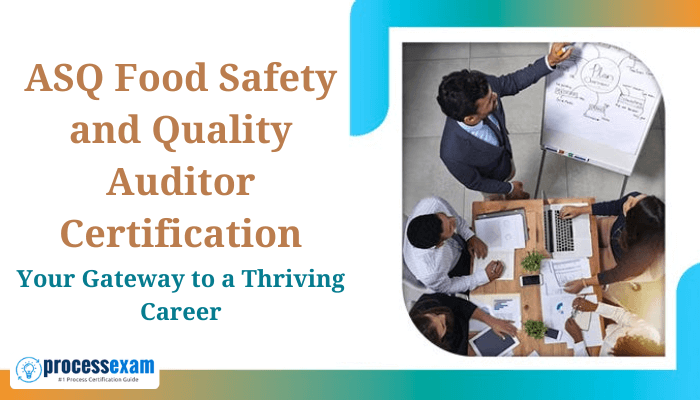
Food safety team reviewing an audit plan on a whiteboard around a meeting table

Everything below was checked against ASQ's own CFSQA page and its Body of Knowledge document in September 2026. Where ASQ gives a date, the date is quoted with the month it was read, so you can see how fresh it is.

Is the CFSQA the right credential for your food safety job?

ASQ describes the CFSQA holder as someone who can audit a food safety and HACCP-based system: examine it, question it, evaluate it and report on where it is adequate and where it falls short. That is an auditor's credential, not a food scientist's or a plant operator's. If your working day is spent checking whether someone else's system does what it claims, it fits. If you mostly run a line, it will feel like a stretch.

SDP Certification: The SAFe DevOps Exam Is Not About Tools

Updated on 23 September 2026. What’s new: exam access corrected to the first two attempts within 60 days of the course at $50 a retake, written for the current SDP 6.0 release.

The SAFe DevOps Practitioner exam is 45 multiple-choice questions in 90 minutes, and 73% is the pass mark. You reach it through the two-day SAFe DevOps course, and the first two attempts are covered by your course fee if you sit them within 60 days. What surprises most candidates is where the marks sit. The single heaviest lesson is Continuous Exploration, at 25-27% of the paper, and not one of its topics is about a build server.

Preparation tips to pass the SAFe SDP certification exam, with a candidate studying at a laptop

That is the whole character of the SDP exam in one sentence. It is written for people who can already automate things, and it spends its questions on the decisions that surround the automation: which value stream to fix first, how a hypothesis becomes a Feature, when to decouple a deployment from a release. Engineers who revise pipelines and containers walk out of the exam puzzled. Engineers who revise the flow of value walk out certified.

This guide sets out what Scaled Agile currently publishes for the SDP exam, how each lesson is weighted, what the attempts and retakes cost, and a six-week plan that fits around a full-time job.

SAFe ASE Certification: Exam Format, Lessons and Study Plan

The SAFe Agile Software Engineering (ASE) exam is 20 multiple-choice questions in 45 minutes, and you need 80% to pass, which means at most four wrong answers. It follows a three-day course with no prerequisites, and Scaled Agile includes your first attempt in the course fee when you sit it within 60 days. The questions test engineering judgement more than recall, so this guide shows what each of the twelve lessons expects.

Candidate with a laptop beside the title How to Prepare for the SAFe ASE Certification Exam

Developers often treat a framework exam as a vocabulary test and are surprised by ASE. Almost every question puts you inside a team that is writing, testing or changing software, and asks which practice keeps quality high while work keeps flowing. If you have never written a behavior-driven scenario or refactored under a test, the wording will feel unfamiliar even when you have years of coding behind you.

Below you will find the exam facts, a straight answer on which release is current, the lessons in the order the study guide lists them, what the attempts cost, a three-week plan and the places where experienced engineers lose marks. The figures come from Scaled Agile's own pages, which we checked in October 2026.

SAFe LPM Certification: Exam Format, Domains and Study Tips

Many people assume the SAFe LPM certification is a budgeting course for finance staff. It is not. The SAFe Lean Portfolio Manager credential checks whether you can tie strategy, funding and flow together across a whole portfolio. You earn it by completing Scaled Agile's two-day Lean Portfolio Management course and then passing a 45-question, 90-minute online exam with a score of 77% or better. The exam is still written for LPM 6.0, which we confirmed in September 2026.

Candidate with a laptop beside a SAFe LPM certification study tips banner

This guide takes the myth apart and puts something more useful in its place. It covers what the credential really says about you, how the exam is set up and what it costs, why LPM has not joined the AI-Empowered releases, how the seven domains are weighted, the handful of portfolio tools that most questions return to, a study plan built around the course, the errors that sink otherwise capable candidates, and a frank view of who should take it.

What does the SAFe LPM certification actually prove about you?

A portfolio in SAFe is a set of development value streams that share one budget and one strategy. Lean Portfolio Management is the function that decides how that money is spent, which large initiatives go ahead, and how leaders know whether the portfolio is delivering what the business needs. Scaled Agile describes Lean Portfolio Management as the competency that aligns strategy and execution through Lean and systems thinking applied to investment funding, Agile portfolio operations and governance.

SAFe for Architects Certification: Is It Worth It?

Yes, SAFe for Architects is worth it for a system, solution or enterprise architect whose employer already runs Agile Release Trains or is about to start them, and it adds little if your company does not use SAFe at all. The credential does not test how to design systems. It tests how an architect works inside the Scaled Agile Framework. The exam has 45 questions, 90 minutes and a 71% pass mark, and you sit it after a three-day course.

SAFe ARCH certification preparation tips and study materials

People search for "SAFe for Architects certification" and "SAFe for Architects exam" when a manager has just offered a seat on the course, or when a job advert lists the credential and they want to know what it proves before spending three days on it. This guide gives a straight answer to the worth-it question first, then the exam facts as Scaled Agile publishes them in October 2026, the five domains that carry the marks, a four-week plan for a working architect and the habits that help when a scenario clashes with your own design instincts.

Who gets real value from SAFe for Architects, and who can skip it?

Scaled Agile aims the course at senior technical people in a SAFe enterprise: system architects, solution architects and enterprise architects. Its certification page labels the course advanced level and describes the audience as people already familiar with enterprise and solution architecture. It does not list a formal prerequisite, so nobody checks your CV at the door, but the course assumes you have lived with real architecture trade-offs and want to see how SAFe expects them to be handled.

ServiceNow CSA Exam Preparation: Blueprint, PDI Drills and Practice Tests

Your first ticket as a new ServiceNow administrator reads: make the Business justification field mandatory on change requests, but only for the CAB approvers group. That one request is the ServiceNow CSA exam in miniature. To pass, learn the six blueprint domains, practise tasks like this on a free Personal Developer Instance, and use timed practice tests to find which domain still costs you marks.

Student with a laptop beside the title Boost Your ServiceNow CSA Certification Preparation with Practice Test

The ticket looks like a five-minute job. It is not, and the reasons why are exactly what the Certified System Administrator exam checks. This guide works through that ticket, sets out the exam facts and the blueprint weights, explains what an administrator really configures in each domain, and then shows how to turn a developer instance and a set of practice tests into a preparation routine that measures progress instead of guessing at it.

Why is a group-only mandatory field harder than it looks?

A beginner opens the form, right-clicks the field label, chooses Configure Dictionary and ticks Mandatory. The field is now mandatory for everyone, on every form and every view, which is not what the ticket asked for. Worse, the change sits on the dictionary entry, so it also affects every table that extends the one being edited unless someone adds a dictionary override. The exam likes this trap because the option looks right and is close to right.

Syndicate content